
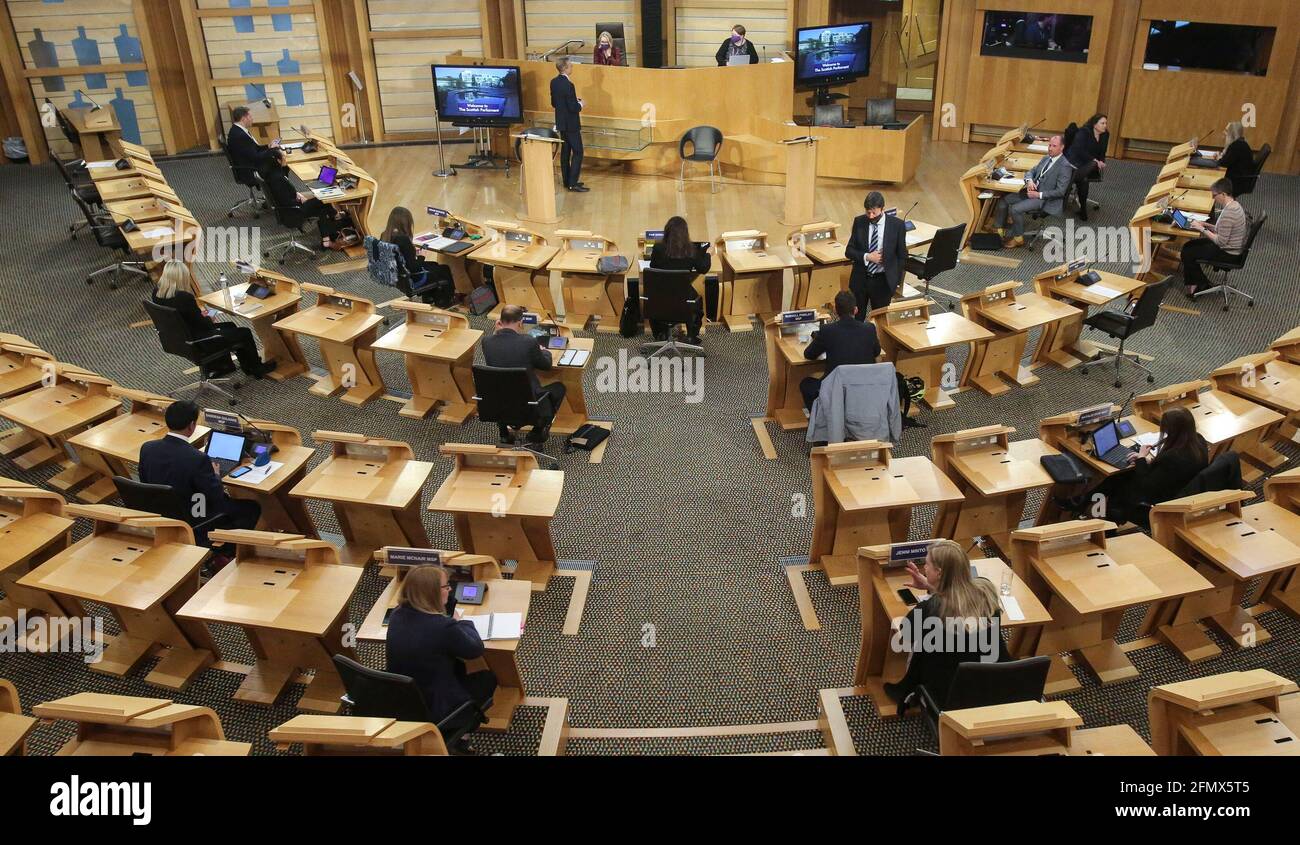
The Scottish Parliament has seen a significant escalation in political hostility, with recent First Minister’s Questions (FMQs) sessions characterized by intense jeering and verbal clashes. These exchanges have included cries of “shame on you” and serious accusations of racism, incitement, and fascism being leveled between members of the chamber. This breakdown in decorum reflects a deepening polarization within Holyrood as opposition parties and the Scottish Government clash over high-stakes policy issues.
The atmosphere during these sessions has been described by observers as increasingly volatile, with the traditional structured debate of FMQs frequently interrupted by vocal dissent. According to parliamentary records and reports from major broadcasters, the level of disruption has reached a point where the Presiding Officer has had to repeatedly intervene to restore order. These interruptions often occur during heated exchanges regarding the Scottish Government’s handling of social policy, migration, and economic stability.
The intensity of the recent sessions follows a period of significant political transition within the Scottish National Party (SNP) and heightened tension between the governing administration and opposition groups, including the Scottish Conservatives and Scottish Labour. The friction is no longer confined to policy disagreements but has increasingly moved into personal and ideological territory, with members using highly charged language to challenge the legitimacy and ethics of their opponents.
The breakdown of parliamentary decorum
During recent sessions of FMQs, the standard procedure of questioning the First Minister has frequently been superseded by outbursts from the benches. Witnesses and parliamentary reporters have noted that questions are often “drowned out” by jeers and organized shouting. The phrase “shame on you” has become a recurring refrain from both sides of the chamber, used to signal moral condemnation during debates on controversial government decisions.

This trend toward verbal confrontation marks a shift from the more measured, albeit still adversarial, debates that have characterized previous sessions. The disruption often centers on specific policy announcements or responses to economic data. When the First Minister provides justifications for government spending or legislative priorities, the response from opposition MSPs has frequently included vocalized indignation rather than formal follow-up questions.
The Presiding Officer, who is responsible for maintaining order in the chamber, has issued several warnings to members regarding the breach of parliamentary standing orders. These rules are designed to ensure that all members can be heard and that the dignity of the Parliament is preserved. Frequent interruptions and the use of inflammatory language are direct violations of these protocols, yet the frequency of these incidents suggests a growing disregard for the traditional rules of engagement.
Accusations of extremism and racism
The most significant escalation in the chamber involves the use of extreme political labels. Accusations of “racism” and “fascism” have surfaced during debates, particularly when discussions turn to migration, asylum seeker support, or identity-related legislation. These accusations are often leveled by opposition members against government representatives, or vice versa, depending on the specific legislative context.
For example, during debates surrounding the Scottish Government’s approach to migration and the integration of displaced persons, some MSPs have accused the administration of failing to uphold human rights standards, while others have countered with accusations of incitement or divisive rhetoric. The use of the term “fascism” has appeared in contexts where members argue that government policies or the suppression of certain viewpoints represent an overreach of authority.
These high-intensity accusations carry significant weight in a legislative environment. When members move from debating the merits of a bill to questioning the fundamental character or racial motivations of their colleagues, the ability to reach a consensus or engage in constructive scrutiny is severely diminished. Political analysts have noted that this shift toward “ideological warfare” makes the legislative process more difficult and increases the risk of further social polarization outside the chamber.
The impact of these accusations extends beyond the walls of Holyrood. Because the Scottish Parliament is the primary legislative body for Scotland, the rhetoric used by MSPs often sets the tone for public discourse across the country. The normalization of terms like “racist” or “fascist” in a formal setting can influence how these terms are used in broader political campaigning and media coverage.
A comparison of parliamentary atmosphere
The current state of the Scottish Parliament can be contrasted with the periods of relative stability seen in previous legislative cycles. While FMQs has always been a partisan event, the nature of the confrontation has evolved.
| Feature | Traditional FMQs Decorum | Recent FMQ Trends |
|---|---|---|
| Primary Mode of Opposition | Structured follow-up questions and formal scrutiny. | Vocal jeering and interruptions of the speaker. |
| Nature of Rhetoric | Policy-focused and adversarial. | Ideologically charged and personal. |
| Use of Extreme Labels | Rare and typically reserved for extreme circumstances. | Increasingly frequent in debates on social and identity issues. |
| Presiding Officer Intervention | Routine management of time and order. | Frequent and urgent attempts to halt verbal outbursts. |
The impact on governance and political stability
The rising temperature in the Scottish Parliament has practical implications for the efficiency of the Scottish Government. Effective governance relies on a degree of predictable interaction between the executive and the legislature. When sessions are dominated by shouting and accusations of extremism, the time available for detailed scrutiny of budgets, public services, and economic policy is reduced.

Furthermore, the atmosphere of hostility can affect the recruitment and retention of parliamentary staff and the ability of MSPs to engage in committee work, which is the backbone of the Scottish legislative process. Committees are intended to be spaces for technical expertise and cross-party cooperation; however, the polarization seen in the main chamber often spills over into these smaller, more specialized groups.
From an economic perspective, political instability and a perceived lack of decorum in a nation’s highest legislative body can influence investor confidence. While the Scottish Parliament operates within the broader framework of the United Kingdom, the ability of the Scottish Government to pass coherent, stable legislation is a key component of the country’s economic reputation. A legislative environment characterized by chaos and irreconcilable certainties can create an atmosphere of unpredictability.
The Scottish Government has maintained that it remains committed to the democratic process and that it will continue to answer questions from the opposition, regardless of the tone used. However, the challenge remains for the administration to navigate a chamber where the traditional boundaries of political debate are being increasingly tested.
The next scheduled First Minister’s Questions will take place on Thursday, providing a further opportunity to observe whether the current trends of disruption and heated rhetoric continue or if the Presiding Officer’s interventions will successfully restore order to the chamber.
Please share your thoughts on the current state of political discourse in the Scottish Parliament. Do you believe the current level of tension is a sign of healthy debate or a breakdown in democracy? Leave a comment below.
Keep reading