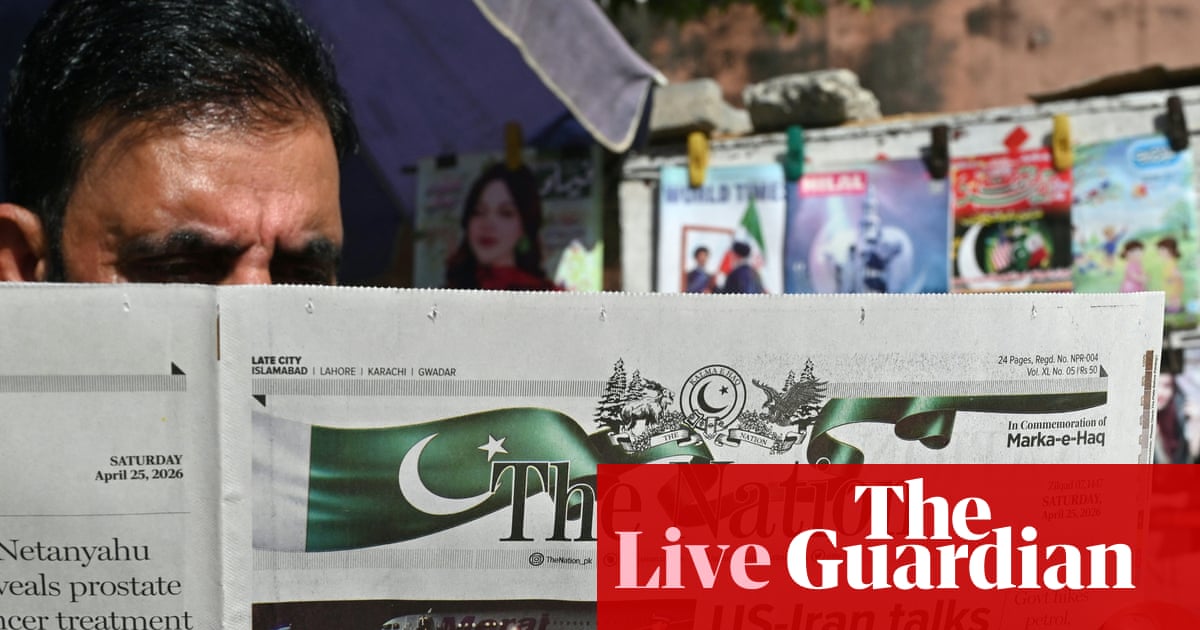
On Saturday, April 25, 2026, Donald Trump’s special envoy Steve Witkoff and Jared Kushner arrived in Islamabad, Pakistan, for peace talks with Iran, according to the White House. The visit comes amid escalating tensions in the Middle East, including continued Israeli military actions in southern Lebanon despite a recently extended ceasefire agreement.
The envoys’ trip follows a series of diplomatic maneuvers aimed at de-escalating the Iran-Israel conflict, which has seen renewed hostilities since late February. White House press secretary Karoline Leavitt confirmed that Witkoff and Kushner were sent “to hear the Iranians out,” adding that President Trump remains “always willing to give diplomacy a chance.” She also noted “some progress from the Iranian side in the last couple of days,” though no direct meeting between U.S. And Iranian officials was planned.
Iran’s foreign minister, Abbas Araghchi, arrived in Islamabad on Friday evening, April 24, and met with Pakistani high-level officials. However, Iran’s foreign ministry spokesman Esmail Baqaei stated that “no meeting is planned to take place between Iran and the US,” adding that Iran’s observations would be conveyed to Pakistan instead. This indirect approach underscores the sensitivity of direct engagement between Washington and Tehran amid ongoing hostilities.
The diplomatic effort coincides with a worsening humanitarian and security situation in the region. The U.S. And Israel began military operations against Iran on February 28, prompting Tehran to restrict shipping through the Strait of Hormuz, a critical global oil chokepoint. U.S. Defence Secretary Pete Hegseth warned that the blockade was “growing and going global,” contributing to surging oil prices worldwide. He emphasized that Iran could secure a “good deal” by abandoning its nuclear weapons program in “meaningful and verifiable ways.”
Meanwhile, Israel’s military campaign in Lebanon continued despite a ceasefire extension announced by President Trump on Thursday, April 24. The original truce, which began on April 17, was set to expire on April 25 but was extended by three weeks. However, the Israel Defense Forces (IDF) reported launching strikes in southern Lebanon on Friday, targeting areas including Deir al-Zahrani, Kfar Reman, and al-Sama’iya—villages north of IDF positions. The IDF said the strikes hit what it claimed were Hezbollah rocket launchers.
Smoke was observed rising from the affected areas, as seen from the Israeli side of the border, according to Reuters photography cited by multiple outlets. While the ceasefire remains loosely held, both sides have reported sporadic violations since its inception, with few but continued attacks reported. The extension aims to create space for negotiations, though on-the-ground realities suggest fragile compliance.
The broader conflict has drawn in multiple regional actors. Hezbollah, based in Lebanon and backed by Iran, has exchanged fire with Israeli forces across the border since the escalation began. The group’s rocket launchers have been a stated target of Israeli operations, though independent verification of specific strike claims remains limited in active war zones.
Diplomatic channels remain active but constrained. U.S. Vice President JD Vance was placed “on standby” to travel to Islamabad if the talks between Witkoff, Kushner, and Iranian intermediaries proved successful, signaling Washington’s readiness to escalate engagement should progress emerge. For now, all communication is being funneled through Pakistani officials, who are hosting both delegations separately.
The situation reflects a complex interplay of military pressure and diplomatic outreach. While the U.S. Insists on verifiable limits to Iran’s nuclear capabilities, Tehran maintains its program is peaceful and has framed U.S. Actions as economic warfare. The Strait of Hormuz dispute remains central, with nearly 20% of global oil supply passing through the waterway, making any disruption a matter of international concern.
As of Saturday morning, no formal breakthrough had been reported from the Islamabad talks. Observers note that the absence of direct U.S.-Iran contact, despite high-level envoys in the same city, highlights the deep mistrust between the two governments. Pakistani officials have not disclosed the content of their separate meetings with either side, citing diplomatic protocol.
The coming days will be critical in determining whether the current diplomatic push can translate into tangible de-escalation or whether military actions will continue to dictate the pace of events. With oil markets volatile and regional allies on edge, the stakes extend far beyond the immediate belligerents.
For ongoing updates on the Middle East crisis, including official statements from the White House, Iran’s foreign ministry, and the Israel Defense Forces, readers are encouraged to consult verified government sources and international monitoring bodies.
If you have insights or observations about these developments, we welcome your thoughts in the comments below. Please share this article to help others stay informed about this evolving situation.
Worth a look