
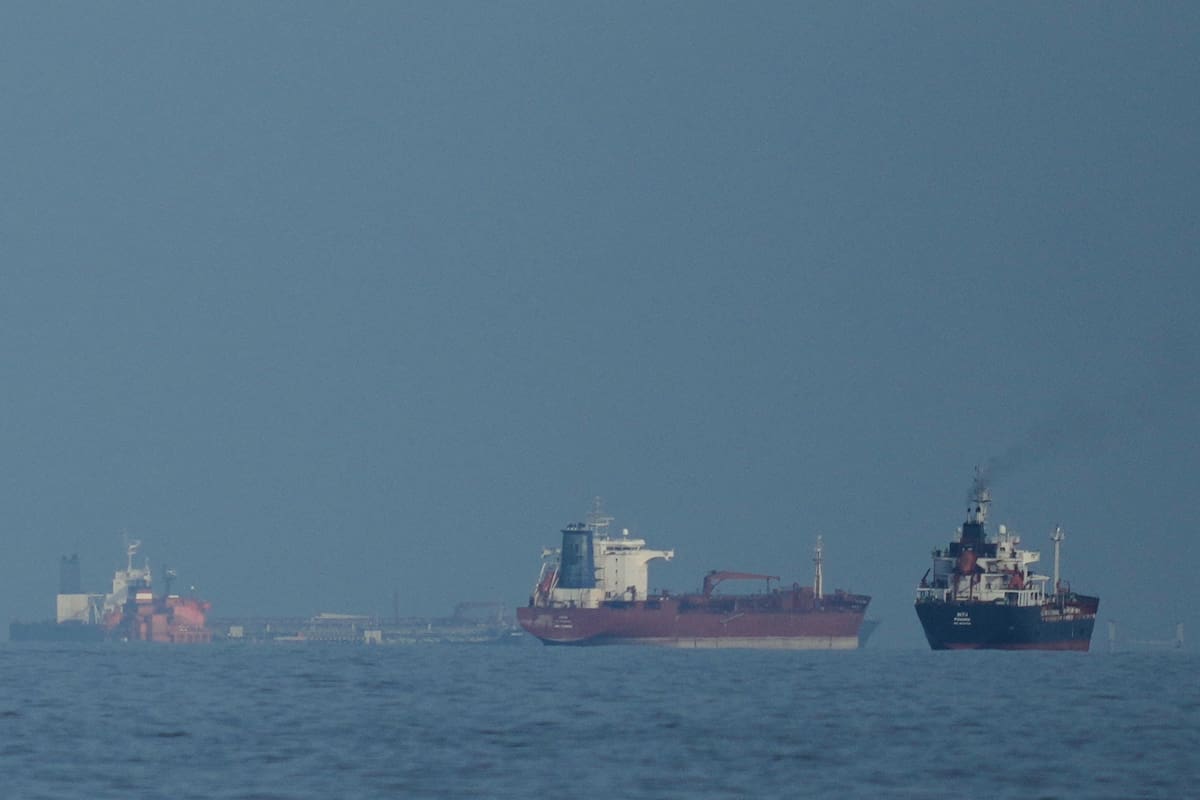
In a significant escalation of tensions in the Persian Gulf, the United States military intercepted and boarded an Iranian-flagged cargo vessel in the Strait of Hormuz on May 12, 2024, according to multiple defense officials and maritime tracking data. The incident occurred amid heightened regional alert following renewed warnings from Tehran about potential disruptions to shipping lanes critical to global oil supplies. U.S. Central Command confirmed the operation was conducted under existing maritime security protocols aimed at enforcing international sanctions and preventing illicit cargo movements, though it did not disclose the specific nature of the vessel’s alleged violation.
The ship, identified as the MV Shahid Rajaee, was transiting through the strait when it was approached by a U.S. Navy guided-missile destroyer and a patrol aircraft. Video footage released by Iranian state media showed personnel from what appeared to be U.S. Special operations forces boarding the vessel via helicopter, while Iranian naval vessels monitored the situation from a distance. Tehran swiftly condemned the action as an act of “piracy” and a violation of international law, summoning the Swiss ambassador—who represents U.S. Interests in Iran—to deliver a formal protest.
U.S. Officials, speaking on condition of anonymity, stated that the interception was based on intelligence indicating the vessel was attempting to circumvent sanctions by transporting dual-use goods potentially linked to Iran’s missile program. But, no contraband was publicly displayed or confirmed seized during the operation, and the ship was eventually allowed to continue its journey after a several-hour delay. The incident underscores the fragile security environment in one of the world’s most strategically vital maritime chokepoints, where approximately 20% of global oil trade passes annually.
Context: Renewed Friction in the Strait of Hormuz
The Strait of Hormuz, a 21-mile-wide passage between Oman and Iran, has long been a flashpoint for geopolitical tension due to its role as a conduit for liquefied natural gas and crude oil exports from Saudi Arabia, Iraq, the UAE, and Kuwait. Since 2019, the region has seen periodic incidents involving the seizure or harassment of commercial vessels, often attributed to Iran’s Islamic Revolutionary Guard Corps Navy (IRGCN) in response to U.S.-led sanctions pressure.
This latest incident follows a series of escalatory statements from both sides. In early May 2024, Iranian President Ebrahim Raisi warned that any attempt to block Iranian oil exports would be met with a proportional response, while U.S. Secretary of Defense Lloyd Austin reaffirmed America’s commitment to freedom of navigation in international waters. The timing of the MV Shahid Rajaee interception coincided with joint U.S.-Gulf naval exercises focused on mine countermeasures and visit, board, search, and seizure (VBSS) operations—drills routinely conducted to maintain readiness in high-risk areas.
Maritime security analysts note that while direct confrontations between U.S. And Iranian forces remain rare, the risk of miscalculation persists. “Every close encounter increases the chance of an unintended escalation,” said Elizabeth Rosenberg, a former Treasury Department official specializing in Iran sanctions, in an interview with Reuters. “The U.S. Has a legal basis to interdict vessels suspected of sanctions violations under executive orders and UN resolutions, but Iran views any such action as illegitimate unless conducted under UN mandate.”
Legal Framework and Precedent
The United States has maintained a sanctions regime against Iran since the 1979 revolution, with secondary sanctions targeting third-party entities that facilitate transactions with sanctioned Iranian industries. Under Executive Order 13876, issued in 2019, the U.S. Treasury’s Office of Foreign Assets Control (OFAC) can designate vessels involved in transporting Iranian petroleum or petrochemicals in violation of sanctions.
In practice, U.S. Naval forces do not typically seize ships outright but may delay or divert them for inspection, often in coordination with allied navies. A similar incident occurred in October 2023 when the USS McFaul intercepted the Iranian-flagged Saviz in the Red Sea, which the U.S. Claimed was being used as a forward base for Houthi rebel operations—a claim Iran denied.
International law permits visit and search operations on the high seas only under specific conditions, including reasonable suspicion of piracy, slave trading, unauthorized broadcasting, or violations of UN Security Council resolutions. While the U.S. Argues its actions fall under counter-proliferation mandates, Iran maintains that unilateral interdiction violates the United Nations Convention on the Law of the Sea (UNCLOS), to which both nations are signatories.
Regional and Global Implications
The Strait of Hormuz remains a critical node in global energy security. Any disruption—whether real or perceived—can trigger volatility in oil markets. Following the May 12 incident, Brent crude futures rose approximately 1.5% in Asian trading, reflecting market sensitivity to Gulf instability. Analysts at the International Energy Agency (IEA) warn that prolonged tension could lead to higher insurance premiums for shipping, increased naval escorts, and rerouting of vessels around the Cape of Good Hope, significantly raising transport costs.
For Iran, the ability to export oil despite sanctions is vital to its economy. Despite U.S. Pressure, Tehran has continued to ship crude to customers in China and India through complex ship-to-ship transfers and deceptive routing practices, often involving flags of convenience and disabled transponders. The U.S. Interception of the MV Shahid Rajaee may signal a more aggressive enforcement posture, particularly as negotiations over Iran’s nuclear program remain stalled.
Neighboring Gulf states, including Saudi Arabia and the UAE, have publicly urged restraint while privately coordinating with U.S. Forces on maritime domain awareness. Both countries have invested heavily in naval capabilities and participate in the Combined Maritime Forces (CMF), a U.S.-led multinational partnership focused on counter-terrorism, piracy, and illicit smuggling in regional waters.
Humanitarian and Economic Considerations
While military interdiction operations aim to enforce policy objectives, they carry risks to civilian seafarers. The MV Shahid Rajaee crew, reported to be multinational, was not harmed during the boarding, but such incidents can cause psychological trauma and operational delays with financial repercussions for shipping companies. The International Transport Workers’ Federation (ITF) has called for clearer rules of engagement to protect merchant mariners caught in geopolitical crossfire.
disruptions in Hormuz can indirectly affect global supply chains beyond energy. The strait is also a route for containerized goods moving between Asia and Europe, and any sustained slowdown could exacerbate existing logistics challenges. The World Bank estimates that a complete closure of the Strait of Hormuz would reduce global GDP by up to 1% annually due to increased energy and transport costs.
What Comes Next
As of May 2024, neither the U.S. Department of Defense nor Iran’s Ministry of Foreign Affairs has announced plans for further escalation or de-escalation measures related to the incident. The MV Shahid Rajaee was last tracked heading toward Bandar Abbas, Iran’s main port on the strait, after resuming its voyage.
Diplomatic channels remain open through intermediaries, with Oman and Qatar frequently facilitating backchannel communications between Washington and Tehran. The next potential flashpoint could arise if Iran responds with a proportional action—such as detaining a vessel linked to U.S. Interests—or if new intelligence prompts another U.S. Interdiction attempt.
For now, the incident serves as a reminder of the persistent volatility in one of the world’s most sensitive maritime corridors, where military posturing, sanctions enforcement, and freedom of navigation principles continuously intersect.
Readers seeking official updates can consult the U.S. Central Command website U.S. Central Command and Iran’s Ministry of Foreign Affairs portal Ministry of Foreign Affairs of the Islamic Republic of Iran for statements and press releases.
We invite you to share your perspective on this developing story in the comments below and to share this article with others interested in global affairs and maritime security.