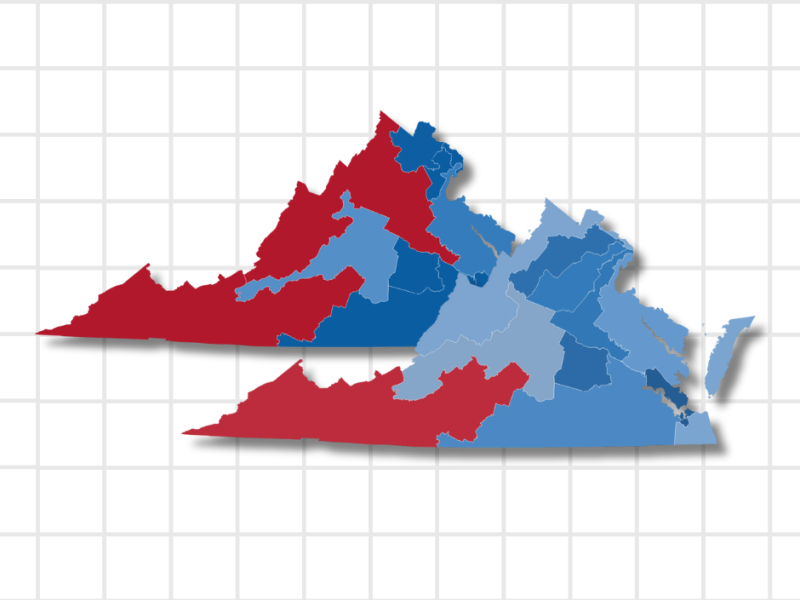
Virginia’s highest court has declined to block the use of a new congressional map approved by voters in a special election, allowing Democrats to proceed with the redistricting plan despite ongoing legal challenges. The decision, issued by the Virginia Supreme Court, means the state will use the voter-approved districts for the upcoming 2026 election cycle even as litigation over the map’s validity continues.
The ruling comes after a circuit court judge had previously blocked certification of the election results, citing procedural flaws in how the constitutional amendment was placed on the ballot. That decision was appealed by state officials, leading to the Virginia Supreme Court’s review. In its order, the high court determined that the lower court’s injunction should not stand, emphasizing that the voters’ approval of the map through a legitimate referendum process warranted deference unless clear constitutional violations were proven.
According to the Virginia Department of Elections, the new congressional map was approved by voters in a special election held on April 21, 2026, with approximately 52% in favor. The map, drawn by an independent redistricting commission, aims to create more competitive districts following years of court-ordered redistricting due to racial gerrymandering concerns. Republicans have challenged the process, arguing that the ballot language was misleading and that legislative approval of the amendment violated state constitutional requirements for legislative redistricting.
The Virginia Supreme Court’s decision does not rule on the merits of the underlying legal challenges but focuses narrowly on the appropriateness of blocking the map’s use during pending litigation. The court noted that delaying implementation could create greater disruption to the electoral process than allowing the voter-approved plan to proceed while appeals continue. Election officials have begun preparing candidate filings and voter information based on the new district boundaries.
Legal experts note that the case raises crucial questions about the balance between judicial oversight and voter-initiated redistricting reforms. “When voters approve a redistricting plan through a constitutional amendment, courts must be cautious about overturning that expression of popular will without clear evidence of constitutional defect,” said one election law professor at the University of Virginia School of Law, who requested not to be named due to ongoing involvement in related litigation.
The Republican National Committee and Virginia Republican Party have indicated they will continue pursuing their legal challenges through the appellate process. Their arguments center on claims that the General Assembly improperly delegated its redistricting authority to the commission and that the ballot language violated constitutional requirements for neutrality and clarity. Similar challenges to voter-approved redistricting measures have succeeded in other states, though outcomes often depend on specific procedural details unique to each state’s constitution.
For voters in Virginia, the immediate effect is that congressional candidates will campaign and run in the newly drawn districts for the 2026 election. The map creates several districts characterized as competitive or leaning Democratic, potentially altering the state’s congressional delegation which currently holds a 6-5 Republican majority. Precinct-level voting data from the April special election shows varying levels of support across regions, with stronger approval in urban and suburban areas compared to rural districts.
Election administrators are working to update voter registration systems, polling place assignments, and ballot layouts to reflect the new boundaries. The Virginia Department of Elections has published detailed maps and demographic reports on its website to assist candidates and voters in understanding the changes. Local registrars’ offices are providing guidance to residents who may be uncertain about which district they now reside in under the new map.
The legal battle over Virginia’s redistricting process remains active, with the Virginia Supreme Court scheduled to hear full arguments on the merits of the case in the coming months. Until a final ruling is issued, the voter-approved congressional map will remain in use for the 2026 election, representing a significant test of the state’s commitment to independent redistricting following years of judicial intervention in electoral mapmaking.
As this situation develops, voters seeking official information about their congressional district under the new map can visit the Virginia Department of Elections website or contact their local voter registration office. The outcome of the ongoing litigation will determine whether the current map remains in place beyond the 2026 election or if further judicial intervention will alter Virginia’s congressional landscape once again.
What are your thoughts on Virginia’s redistricting process and the role of courts in reviewing voter-approved election changes? Share your perspective in the comments below, and consider sharing this article with others interested in voting rights and electoral reform.
Keep reading